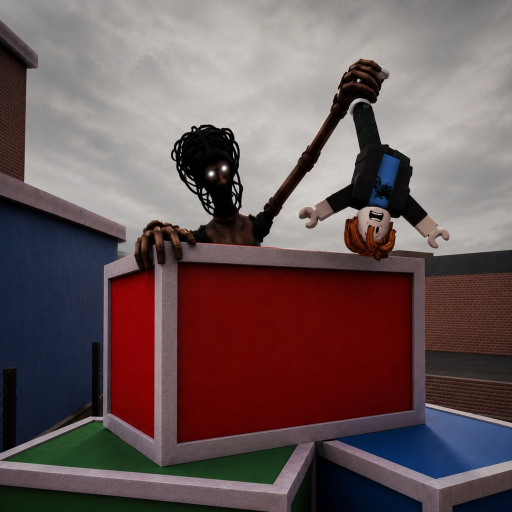
Correct gameOfficial
Place 113385977463481
MM2 of The Locust by THE STALKERS OG.
This guide documents the last accessible build reviewed Aug 30: wait for the role reveal, use the timer and objective, and survive the Locust. The canonical Roblox listing was unavailable Sep 12, so these recordings do not establish a post-Sep 4 build.
These four facts answer the round-level questions without importing ordinary MM2 rules.
MM2 of The Locust by THE STALKERS OG.
Observed in Aug 30 full-round recordings; no creator role table is published.
Do not import ordinary MM2 role rules into this experience.
Official wording says escape; a fixed exit or Key chain is not confirmed.
The order follows the last accessible player task. Recheck the HUD and result screen if the experience returns.
Confirm THE STALKERS OG plus Place ID 113385977463481. The canonical link was unavailable Sep 12, so do not replace it with a similarly named game.
Wait for the transition to finish. Current recordings show a survivor-versus-Locust loop, but the live role screen is the only answer for your server.
A television emergence sequence is visible in current recordings. Treat the current TV area as an early danger landmark, not a universal fixed coordinate.
Protect time and route options. Recordings show a timer-style result, while exact round length and the meaning of every night label are not creator-published constants.
Corners and floor changes can buy time. Do not stop in a dead end or assume a high ledge or low gap blocks a Locust that may climb or crawl.
Use the current result screen, objective completion, or round transition. Do not call a door the final exit or a missing gun a permanent rule from one round.
The accessible August listing identified the exact experience, used PRE-ALPHA wording, and described the nest premise. The canonical listing was unavailable Sep 12.
Full-round videos reviewed Aug 30 show the role flow, television emergence, timer result, chase movement, and mutable interface state from the last accessible build.
A permanent Sheriff, dropped gun, fixed exit, fixed Key chain, exact round length, and cross-platform controls are not established by creator documentation.
Searching the whole round for a gun. No dropped-gun path is verified in the reviewed current rounds. Follow the survival objective unless the live HUD clearly provides another job.
Running in a straight line. Current chase footage suggests long open pursuit favors the Locust. Use solid geometry and keep another route.
Calling a hiding spot safe. Climbing, crawling, door failures, and map changes can invalidate a one-video spot. Describe what buys time and how it fails.
Recordings show Aug 30 rounds; the canonical Roblox link now establishes only the current access state.
Exact Place identity and the current Title Unavailable redirect; the old PRE-ALPHA copy is historical.
Dated role, timer, television, chase, and result observations; not permanent rules.
Used to compare round flow, map movement, and chase behavior in the last accessible build.
Join the exact game, wait for the role reveal, use the timer and live objective, avoid the Locust, and verify the result screen. Current recordings show a survivor-versus-Locust survival loop.
No Sheriff or dropped gun is visible in the current full-round recordings reviewed Aug 30, but the creator has not published a role roster. Treat those roles and items as unverified, not permanently impossible.
The Aug 30 recordings show a timer or nights flow, but this guide does not freeze an exact duration because no official constant or independent post-Sep 4 gameplay test is available.
A television emergence sequence appears in current community recordings. The exact map position and spawn-selection rule remain current-build observations.
These mechanics come from the last accessible build reviewed Aug 30. Use the live HUD and result screen if the experience returns, and check the current status before treating an older recording as active.